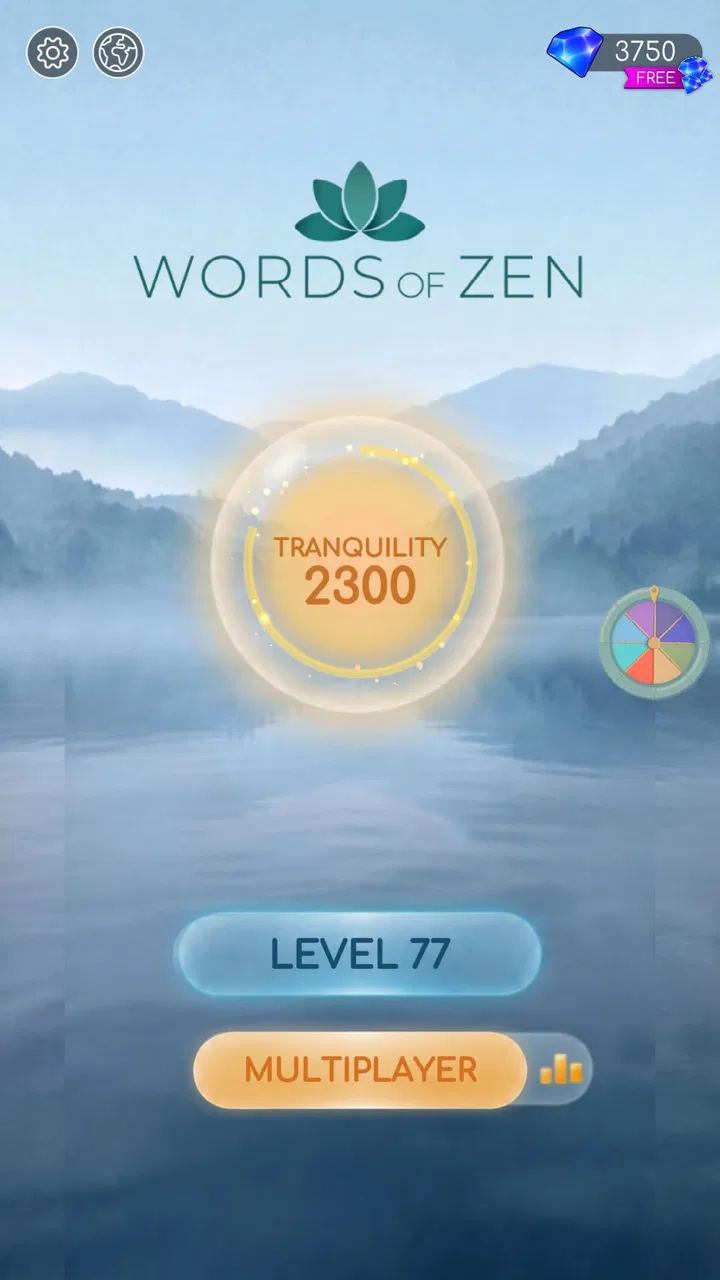
Words of Zen: Crossword
- 4.9
- Rating
- 10.00K
- Installs
- Free
- Price

 Analysis by App-foxy
I spent time with Words of Zen: Crossword as a quiet, low-pressure word game, and its appeal is easy to understand: it turns solving into a slower, more relaxing activity rather than a race against a clock. The presentation aims for a peaceful mood, while the core task remains familiar enough for anyone who already enjoys crosswords or simple word puzzles. I found it best suited to short breaks, evening unwinding, and those moments when I want something interactive without the intensity of an action game.
This is a free game in the word category, developed by WAYSTAR GAMES DİJİTAL SERVİSLER A.S. It is rated for Everyone, so its general tone is approachable for a broad audience. The current release is version 1.0.1, and the game runs on devices using Android 7.1 or later. Its early store reception is notably positive, with a 4.9 average from around 160 ratings, alongside more than 10 thousand installs. Those figures suggest that the initial audience has responded warmly, although the relatively young product still feels like something that will need continued refinement to establish a long-term identity.
How the current version feels to play
The strongest part of the experience is its sense of restraint. Many word games push constant rewards, countdowns, competitive rankings, or increasingly frantic challenges. This one is more comfortable when approached as a daily mental pause. I could open it without needing to prepare for a complicated session, work through a puzzle at my own pace, and stop when I felt ready. That makes it a natural companion for a morning coffee, a commute when I am sitting safely, or a few quiet minutes before bed.
You May Also Like

 Blood Strike: 2.5 Anniversary
Blood Strike’s Loadouts Turn Every Drop Into a Tactical Gamble
A close look at Blood Strike’s custom loadouts: how fast access to signature weapons reshapes its battle royale rhythm, rewards preparation, and narrows the gap between fights.

 Pandora - Music & Podcasts
Pandora’s Music Is Easy to Start, but Harder to Recover
Pandora’s strength is its low-effort path from a seed to a station. Its weak spot is how much confidence it asks you to place in connection, setup, and quiet recovery.

 8 Ball Pool
 Is Built on Rivalries, Rematches, and Routine
A close look at the rivalries, rematches, shared routines, and unanswered safety questions that turn a quick pool match into a persistent mobile community.

 Samsung Music
’s Quiet Strength Is Playing What You Already Own
Its reach comes less from spectacle than from dependable access to a personal library. That simplicity is both the app’s strongest retention engine and its ceiling.

 AccuWeather: Weather Radar
AccuWeather Review: A Quick, Clear Forecast for Everyday Decisions
For everyday plans, the best forecast is the one you can understand quickly. AccuWeather makes rain timing, radar, and local conditions easy to act on, with a few trade-offs.

 Hill Climb Racing
Why Hill Climb Racing Still Turns Crashes Into One More Run
A tiny car, a bumpy hill and one more upgrade: Hill Climb Racing keeps resurfacing because its simple chaos makes every near-miss feel personal.
More From Our News Desk



The crossword format gives the game an immediately understandable foundation. You are not learning an elaborate rule system before getting to the interesting part. Instead, the satisfaction comes from recognizing a clue, testing a possible answer, and using crossing letters to narrow down the uncertain spaces. That familiar structure matters because the calming theme does not have to carry the entire experience. Even if the atmosphere is not your main reason for playing, the word-solving loop gives you a practical reason to return.
I also appreciated that the game’s mood changes the way I approach mistakes. In a more competitive puzzle title, an incorrect answer can feel like a setback that interrupts a streak or wastes a limited resource. Here, the overall concept encourages patience. I was more willing to leave a difficult clue unfinished, solve another area, and come back later with additional letters. That is a small but meaningful difference for players who like word games but dislike pressure.
The peaceful positioning will not appeal equally to everyone. If you want demanding vocabulary tests, rapid-fire rounds, or a strong competitive layer, this may feel too gentle. The game is more about creating a comfortable routine than proving how quickly you can solve. I would recommend it to someone who wants a relaxing crossword-style activity, but I would point a serious tournament-minded puzzler toward a more rigorous alternative.
A useful game for small pockets of time
One realistic use case is a person who has ten quiet minutes between responsibilities. Rather than opening a social feed and losing track of time, they can work on a few clues, pause when needed, and return later. That stop-and-start rhythm suits the genre well. I found that the best sessions were not necessarily long ones; a short sequence of successful answers could provide the same satisfying mental reset that I was looking for.
For older players or families, the Everyone rating also makes the game easier to consider as a broadly accessible pastime. That does not mean every clue will be equally easy for every age group. Vocabulary, cultural familiarity, and personal interests still affect difficulty. However, the general concept is simple enough to explain without a long tutorial, which lowers the barrier for someone who does not regularly play mobile games.
It can also work for players who want to maintain a word-solving habit without committing to a large game. I would use it when I wanted a little stimulation but did not want an elaborate story, a large download, or a demanding control scheme. That focused purpose is one of its clearest strengths.
What the release information tells us about its direction
The current version, 1.0.1, places the game at an early stage of its product life. That is important context when judging it. I see a foundation built around accessible crossword play and a calm presentation, rather than a mature platform with years of accumulated systems. The release date of April 22, 2026, also frames the experience as a recent arrival. I would not judge it by the same expectations I would apply to a long-established word-game collection.
At this stage, the most convincing evidence is the clarity of the central idea. The game knows that it wants to be soothing, and it connects that mood to a familiar puzzle format instead of adding unnecessary complexity. The positive early reception supports the idea that this combination works for at least part of its audience. Still, early enthusiasm is not the same as proven longevity. The next updates will matter because regular players will want reasons to keep returning after the first wave of puzzles has lost its novelty.
I am careful not to treat the current release as a promise of features that have not arrived. A recent version can improve, expand, or change direction, but those possibilities should remain expectations rather than facts. For now, I would describe the game as a focused starting point: pleasant, understandable, and promising, with its long-term value depending on how consistently the experience develops.
How it compares with familiar word-game alternatives
Compared with a traditional newspaper crossword, this game is more convenient because it is always available on a phone and does not require a pen, an eraser, or a flat surface. The trade-off is that a physical puzzle can feel more deliberate and tactile. Some players also prefer the authority and editorial style of a printed crossword, while others enjoy the flexibility of a digital format. I see this game as better for casual access and relaxation than for replacing every serious crossword habit.
Compared with fast daily word games, its appeal is less about finding one answer under a tight routine and more about settling into a broader puzzle. A quick daily challenge can be ideal when you want a compact ritual with a clear finish. This game is a better fit when you want to continue exploring clues at your own pace. If your favorite part of word gaming is comparing results with friends or protecting a daily streak, another category of app may serve you better.
It also differs from vocabulary-training tools. Learning-focused apps often explain definitions, track progress, or deliberately introduce new terms. A relaxing crossword game can still make you think about language, but I would not choose it as my main study tool. Its value is the combination of recognition, deduction, and calm repetition, not a structured lesson plan.
Small habits that make solving more enjoyable
My first practical tip is to avoid treating every clue as a test that must be solved immediately. I found better results by filling the answers I felt confident about, then using the crossing letters to revisit the harder spaces. This approach reduces frustration and lets the puzzle provide its own hints through structure. It is especially useful when the relaxing atmosphere makes you want to preserve a steady pace instead of forcing a guess.
A second tip is to use the game as a transition activity rather than background noise. If I opened it while distracted by several other tasks, the calm design could not do much for me. When I gave it a short, defined window of attention, the wordplay felt more rewarding. Even a small routine, such as playing after lunch or before putting the phone away at night, can make the experience feel more intentional.
Third, I would avoid judging the game solely by how quickly it gives you a sense of progress. The slower rhythm is part of its identity. Players who normally skip anything that is not immediately stimulating may initially mistake the quieter pace for a lack of depth. In my experience, the benefit appears when I let the puzzle breathe: solve the obvious clues, pause at the difficult ones, and return without turning the session into a performance.
There is also a useful trade-off around hints and assistance in any crossword-style experience. When I use help too quickly, I lose the satisfaction of making the connection myself. When I refuse all assistance, a single obscure clue can stall the entire session. The sensible middle ground is to reserve help for a genuine dead end and continue solving around it first. That keeps the game relaxing without removing the mental work that makes it worthwhile.
What existing users may notice as the game evolves
Players who have already installed the game will probably judge future releases by whether they preserve the current sense of calm while giving regular users fresh reasons to return. For them, consistency will matter as much as expansion. A peaceful word game can lose its appeal if new layers make it noisy or overly demanding, but it can also become repetitive if the underlying content does not feel renewed.
The current version gives newcomers a straightforward entry point, while early adopters have the advantage of experiencing the game near the beginning of its development. That can be enjoyable for people who like watching a small title mature. It also means they may encounter rough edges that a later audience never sees. I would approach it with reasonable expectations: the core idea is already clear, but the product’s broader shape is still being established.
The free entry price is another reason the game is easy to try. At the same time, in-app purchases range from $0.99 to $39.99 per item, so I would advise checking the purchase prompts carefully and deciding in advance whether you want to spend anything. The free starting point is useful for evaluating the atmosphere and puzzle style, but a player who is sensitive to optional spending should keep an eye on the purchase flow rather than assuming every part of continued play will be cost-free.
That pricing range does not automatically make the game unsuitable. It simply changes how I recommend approaching it. Try the basic experience first, decide whether the puzzle rhythm genuinely fits your habits, and only then consider an optional purchase. For a casual player, there is no reason to spend immediately just because the game is enjoyable. For someone who expects to play regularly, the decision should be based on actual use rather than curiosity at the download screen.
Where the experience still has room to mature
The main limitation is that the calm concept can become narrow if the puzzle experience does not keep offering enough variety. Relaxation is a strong first impression, but it is not by itself a complete long-term progression system. I would like existing players to have clear reasons to return beyond the initial pleasure of the presentation. That could come from richer puzzle variety or better ways to make personal progress meaningful, but I would rather see thoughtful additions than a collection of distracting extras.
Another possible friction point is audience fit. A player who wants a challenging word workout may find the gentle approach underpowered, while a complete beginner may still meet clues that depend on vocabulary they do not know. That is a normal tension in crossword design, but the game’s success depends on handling it carefully. The best experience will be one where mistakes feel like invitations to think rather than reasons to quit.
I also would not choose this as my only word game if I wanted social competition, formal learning, or a highly specialized difficulty curve. Its identity is more personal and atmospheric. That is not a flaw, but it does mean the game should be selected for the experience it actually offers, not for features associated with other parts of the word-game market.
Who should try it, and who should skip it
I would recommend it to players who enjoy crosswords but want a softer mobile routine. It is a good match for people who like solving a few clues at a time, prefer a peaceful tone, and appreciate games that do not demand quick reflexes. It is also worth trying if you want a free way to sample a calming word-puzzle concept before deciding whether it deserves a regular place on your phone.
I would be more cautious about recommending it to players who need intense challenge from the first session. If your ideal word game includes strict timers, competitive leaderboards, detailed learning tools, or a deep social layer, this may not satisfy you. I would also skip it if optional purchases make you uncomfortable and you do not want to monitor them, even though the game itself is free to start.
Device compatibility is relatively broad because the minimum requirement is Android 7.1, but the quality of any mobile game can still depend on the individual phone and the way a person uses it. I would keep the game for a device where reading clues is comfortable and where I can give the puzzles a little attention. A very small screen or a constantly interrupted setting would undermine the quiet focus that makes the title appealing.
What I will be watching in future releases
For a game this new, I would watch how the developer supports the central loop. The important question is not whether it adds features simply to make the store page look fuller. I want to see whether future work makes solving more satisfying while protecting the uncluttered, peaceful identity that separates it from faster word games.
I would also pay attention to how the experience serves both newcomers and returning players. New users need a welcoming start, while established users need enough freshness to avoid feeling that they have exhausted the idea. A good update should ideally help both groups without turning the game into something unrecognizable.
Finally, I would watch the balance between free access and optional spending. The free price makes experimentation easy, but the in-app purchase range means transparency and restraint will be important to the overall impression. If the game continues to feel generous and comfortable before any purchase, that will strengthen trust. If the purchase layer begins to interrupt the peaceful flow, it could weaken the very quality that first attracted me.
My current verdict is positive but measured. Words of Zen: Crossword succeeds because it gives a familiar word-puzzle activity a slower, more restful personality. I enjoyed it most when I treated it as a small daily reset rather than a competition or a study course. Its early rating and growing install base show encouraging interest, but its long-term reputation will depend on how the experience develops after this early release.
If you want a free, accessible crossword-style game for quiet moments, I think it is worth trying. Start without rushing into an in-app purchase, play enough to see whether the peaceful rhythm suits you, and use the crossing letters instead of forcing every answer. If you are looking for speed, social rivalry, or structured vocabulary training, choose a more specialized alternative. For everyone else, this is a gentle beginning with a clear purpose and enough promise to deserve a place on a word-game shortlist.
FAQs for Words of Zen: Crossword
01What is Words of Zen: Crossword and how does it work?
Words of Zen: Crossword is a relaxing and engaging word puzzle game designed to stimulate your mind and enhance vocabulary. It offers a serene environment with soothing visuals and music while you connect letters to form words. The game gradually increases in difficulty, providing a continuous challenge as you progress through various levels.
02Is Words of Zen: Crossword free to download and play?
Yes, Words of Zen: Crossword is free to download and play on Android and iOS devices. However, it offers in-app purchases for additional hints and ad-free experiences. While the game is enjoyable without spending money, purchasing these extras can enhance the gameplay by providing additional support when needed.
03Does Words of Zen: Crossword require an internet connection to play?
No, Words of Zen: Crossword does not require a constant internet connection to play. You can enjoy solving puzzles offline, making it a perfect companion for travel or situations where connectivity is limited. However, some features, like in-app purchases and updates, will require an internet connection.
04What age group is Words of Zen: Crossword suitable for?
Words of Zen: Crossword is suitable for a wide range of age groups, from teens to adults. The game is designed to be family-friendly and does not contain inappropriate content. Its difficulty scales to challenge both beginners and experienced players, making it suitable for anyone looking to improve their vocabulary in a calm setting.
05How can I get help if I’m stuck on a level in Words of Zen: Crossword?
If you find yourself stuck on a level, Words of Zen: Crossword offers several ways to assist you. You can use hints, which are available through in-app purchases or earned during gameplay. Additionally, the community forums and online guides can provide tips and strategies to help you progress further without frustration.
Pros
- Beautiful
- calming visuals enhance relaxation.
- Wide variety of crossword puzzles available.
- Intuitive interface makes navigation easy.
- Regular updates with new content.
- Offline mode for playing without internet.
Cons
- In-app purchases can be expensive.
- Some puzzles may feel repetitive.
- Ads can interrupt the gaming experience.
- Limited hints available without purchase.
- Requires frequent updates for new content.

Words of Zen: Crossword
Gallery